
Material Substitution in Manufacturing: 5 Powerful Ways to Cut Lead Times and Reduce Costs
Material Substitution in Manufacturing: Why It Matters More Than Ever
Component substitution in manufacturing is quickly becoming one of the most important strategies for companies facing supply chain instability, cost volatility, and extended lead times.
What worked five years ago no longer guarantees success today.
Manufacturers are now dealing with:
- Unpredictable component availability
- Increasing costs tied to copper and alloy markets
- Pressure to shift toward more sustainable materials
And yet, many organizations are still relying on outdated specifications.
👉 That’s where material substitution becomes a competitive advantage.
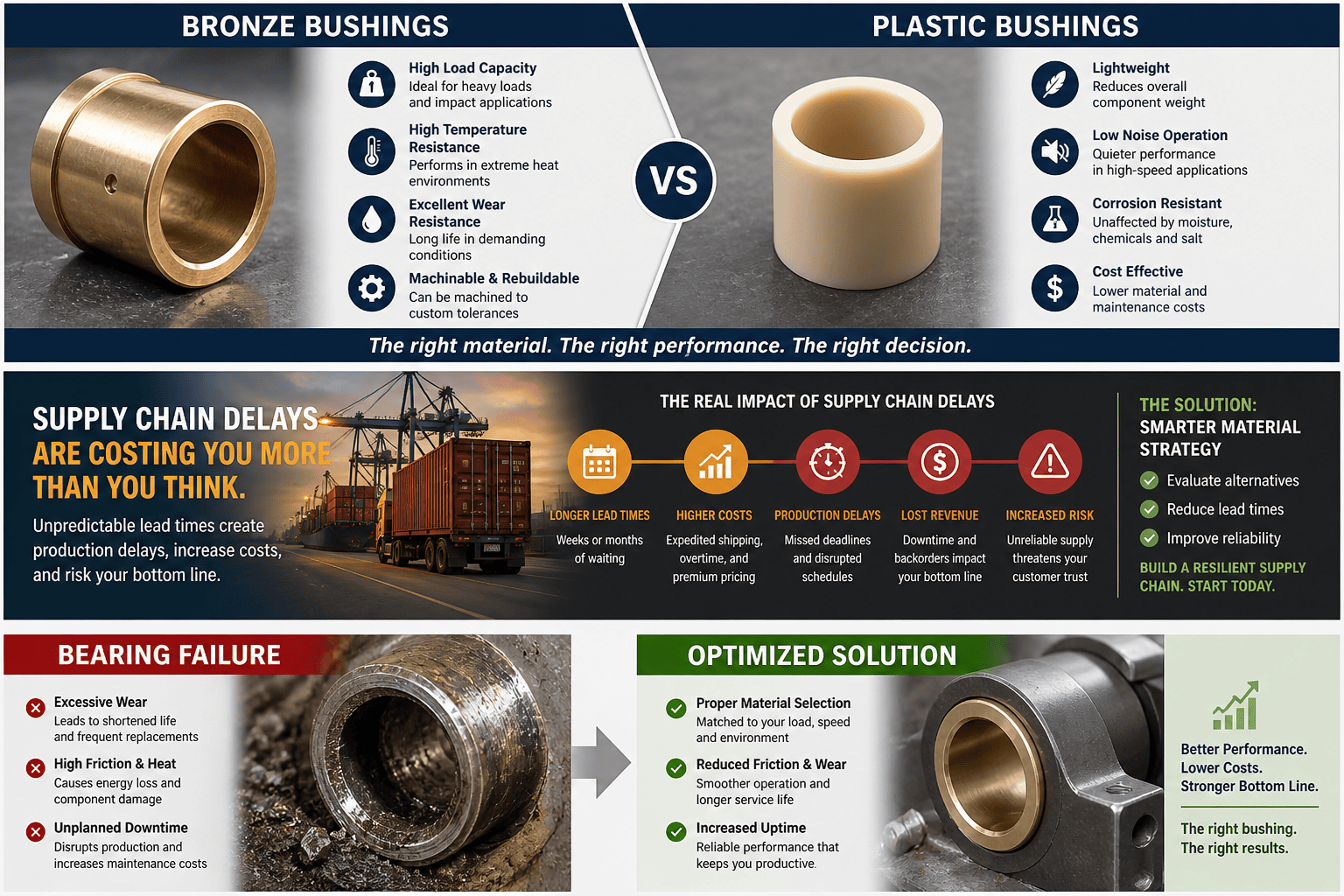
The Hidden Risk of Legacy Design Choice
One of the biggest challenges in manufacturing today is the assumption that component specifications are fixed.
In reality, most specs were originally chosen based on:
- Availability at the time
- Familiarity or historical use
- Cost conditions that no longer exist
As outlined in Bunting’s internal spec data, there is no perfect alloy, only tradeoffs between strength, cost, machinability, and performance
Companies that fail to revisit these decisions are often left dealing with:
- Long lead times
- Higher costs
- Reduced flexibility
5 Powerful Benefits of Material Substitution in Manufacturing
1. Reduced Lead Times
Certain alloys require minimum production runs or specialized casting processes. Substituting with more readily available materials can significantly shorten delivery timelines.
2. Lower Total Cost
Substitution doesn’t just impact unit price. It affects:
- Freight costs
- Inventory carrying costs
- Downtime risk
3. Improved Availability
Stocked components often outperform custom alloys when availability is critical.
4. Sustainability Advantages
There is a growing shift toward environmentally friendly materials, including:
- Lead-free alloys
- Bismuth-based alternatives
- Engineered plastics
5. Performance Optimization
In many cases, a substitute can meet or exceed the original performance requirements when evaluated correctly.
How to Evaluate Component Substitution (Simple Framework)
Before making any substitution, evaluate these five factors:
- Load Requirements
- Speed / Velocity
- Lubrication Conditions
- Operating Environment
- Alloy Availability
For a deeper engineering reference, you can review general bearing spec selection principles from sources like the ASTM International Standards
👉 https://www.astm.org/
Common Alloy Substitution Examples
In real-world applications, common substitutions include:
- Leaded bronze → Bismuth alloys (environmental improvement)
- Bronze → Engineered plastics (low load, high speed)
- Specialty alloys → Stocked materials (availability improvement)
Each decision should be based on application requirements, not assumptions.
When Substitution Does NOT Make Sense
Solution substitution should not be applied blindly.
Avoid substitution when:
- The application is safety-critical
- Regulatory requirements mandate specific materials
- Load conditions exceed alternative capabilities
The Real Cost of Ignoring Material Strategy
Many manufacturers focus only on part cost, but the real impact includes:
- Production delays
- Equipment downtime
- Expedited shipping costs
- Lost revenue from missed deadlines
Material selection is no longer just an engineering decision, it’s a business decision. The right material impacts lead time, cost, uptime, and long-term reliability. Many standard alloys are chosen based on availability rather than performance, which can create hidden risks. In fact, commonly used materials are often selected simply because they are stocked, not because they are optimal.
According to industry supply chain insights from companies that actively manage supply chain flexibility outperform competitors during volatility.
👉 https://www.mckinsey.com/capabilities/operations/our-insights
A Smarter Approach to Component Selection
Instead of asking:
“Can you quote this material?”
Ask:
“Is this still the best solution for the application?”
Leading manufacturers are:
- Re-evaluating legacy specs
- Designing for flexibility
- Partnering with suppliers for strategic input
Final Thought: Rethinking Substitution Strategy
Component substitution in manufacturing is no longer a reactive decision. It is a proactive strategy.
You don’t have a supply problem. You have a material strategy problem.
And solving it creates a measurable competitive advantage.
Call to Action
If you’re currently dealing with:
- Long lead times
- Cost increases
- Hard-to-source alloys
👉 Contact our team to evaluate your current components and identify better alternatives.
Learn more about our engineered plastics → buntingbearings.com/plastics
View our bronze materials → buntingbearings.com/bronze